Breakers that keep tripping
Trace overloaded circuits, short circuits, ground faults, failing equipment, and problems inside the panel or branch circuit wiring.
Electrical troubleshooting & repairs
When breakers trip, outlets stop working, or lights start flickering, careful testing matters. We work through the symptoms, locate the cause, and explain the repair clearly.
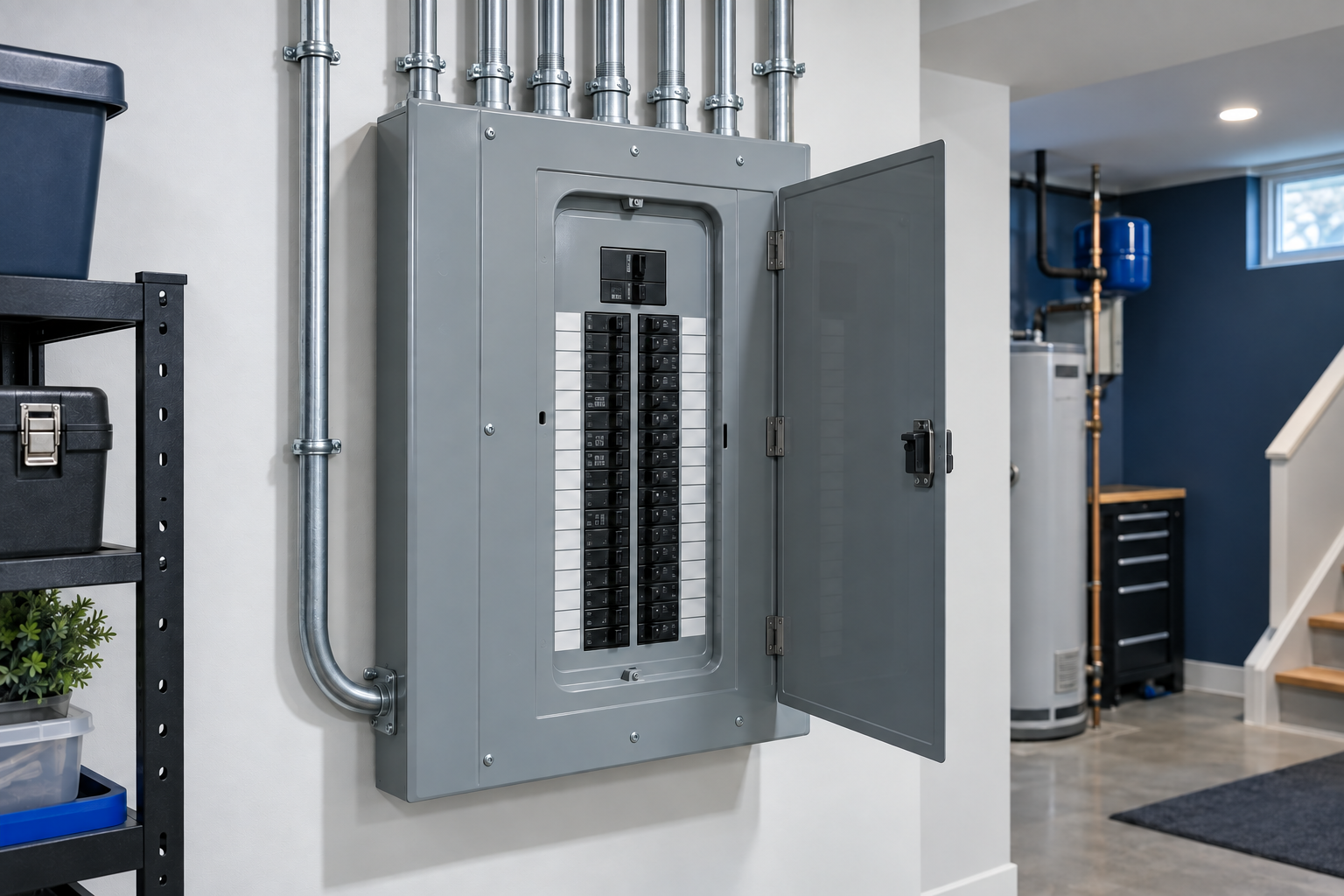
Diagnose before replacing
Start with the symptoms. Follow the circuit. Confirm the cause.
Straight answers
A tripped breaker or dead receptacle may be the first visible symptom, but it is not always the source of the problem. The right approach is to understand when the issue occurs, identify the affected circuit, and test methodically.
We focus on locating the cause instead of guessing and replacing parts unnecessarily. Once the problem is found, you get a clear explanation and a practical repair plan.
Problems we troubleshoot
If something electrical has changed, stopped working, or does not seem right, it is worth identifying the reason.
Trace overloaded circuits, short circuits, ground faults, failing equipment, and problems inside the panel or branch circuit wiring.
Check the affected circuit, GFCI protection, connections, devices, breakers, and other possible causes of lost power.
Inspect lighting connections, switches, shared loads, service conditions, and other issues that can cause unstable lighting.
Diagnose GFCIs that will not reset, warm devices, buzzing, damaged wiring, and other signs that deserve professional attention.
What to expect
We start with what you have noticed and when it happens. Then we inspect and test the affected devices, circuit, and electrical equipment as needed. Testing may include checking voltage, continuity, connections, breaker operation, GFCI protection, and circuit loading.
After the cause is confirmed, we explain the finding and the repair options. If the issue points to a larger concern, such as damaged wiring, an overloaded circuit, or service equipment trouble, we explain that too.
Troubleshooting process
Review what is happening, when it started, and which outlets, lights, appliances, or areas are affected.
Inspect the relevant equipment and perform focused electrical testing to narrow down and confirm the cause.
Discuss what was found, agree on the repair, complete the approved work, and verify proper operation.
Common questions
Good troubleshooting starts with useful information and safe decisions.
Tell us what stopped working, when it happens, which rooms or circuits are affected, and whether any breaker or GFCI has tripped. Photos of the panel and affected devices can help, but keep all covers in place.
A breaker may be responding to an overload, short circuit, ground fault, damaged wiring, or a problem with connected equipment. Repeatedly resetting it without finding the cause can make the situation less safe.
Yes. Devices on the same circuit can be connected through upstream receptacles, GFCIs, switches, or junctions. Testing helps determine where power is being lost.
No. The cause can be a lamp, fixture, switch, loose connection, circuit loading, or a service related issue. The pattern and location of the flicker help guide testing.
Yes. Once the cause is identified, we explain what was found, the recommended repair, and any additional concerns that should be addressed.
Local electrical troubleshooting
Residential troubleshooting and repair service across the northern and northwest suburbs.
Tell us what is happening
Send the location, what stopped working, what you have already noticed, and whether a breaker or GFCI has tripped.
Call or text Comfort Electrical Solutions