Panel capacity check
We review the existing service, panel space, and household load before recommending charger output.
Home EV charging
Level 2 EV charger installation with the panel planning, dedicated 240V circuit, and clean conduit work your home needs.
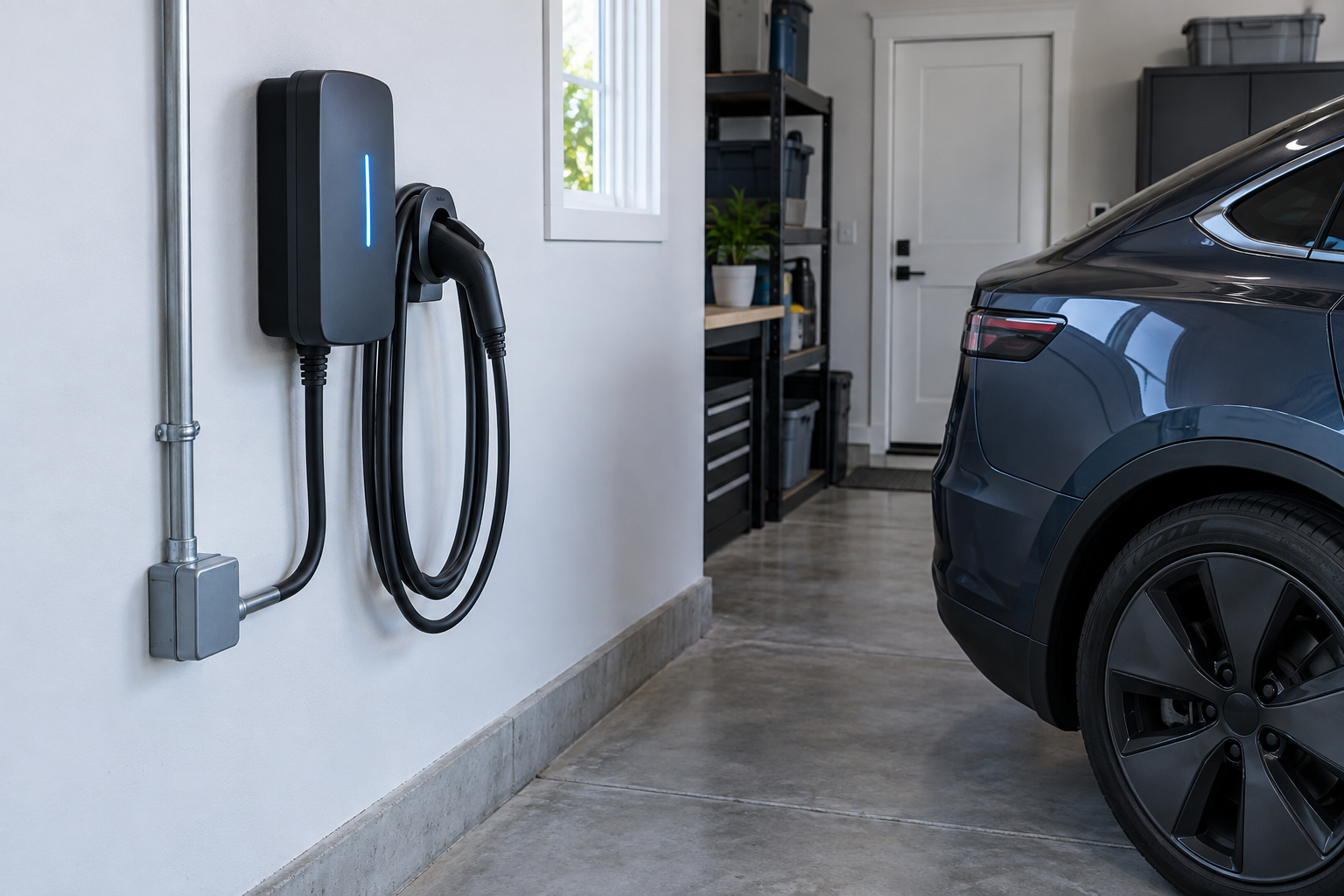
More than mounting a charger
An EV charger is a large, continuous electrical load. A dependable installation starts with checking the service and panel, matching the circuit to the charger, and choosing a route that protects your home’s finished surfaces.
We help you choose the charging setup that fits your vehicle, daily driving, and existing electrical system. That means installing what your home actually needs, not automatically recommending the largest charger or a full service upgrade.
A complete installation plan
One clear plan from the electrical panel to the charger location.
We review the existing service, panel space, and household load before recommending charger output.
The circuit route is planned around your garage, finished surfaces, parking position, and charging cord reach.
Breaker, conductor, grounding, receptacle or hardwired connection, and disconnect requirements are matched to the installation.
A properly sized dedicated 240V circuit gives you reliable overnight charging without relying on a standard wall outlet.
Charging that fits your needs
A 48A charger normally requires a 60A dedicated circuit because EV charging is treated as a continuous load. Lower or adjustable output can be a smart solution when the home has limited capacity or the vehicle does not benefit from more power.
What to expect
Tell us the vehicle and charger model, desired mounting location, and where your electrical panel is located.
We determine the available capacity, circuit route, wiring method, and whether load management or other work should be considered.
The charger circuit is installed neatly, connections are checked, and the equipment is tested before the project is finished.
Common questions
Every home is different, but these are the questions worth answering before work begins.
No. The right answer depends on the home’s calculated electrical load, existing equipment, charger output, and available panel capacity. We check those items before recommending a service upgrade.
Many homes use a 40A or 48A Level 2 charger, but bigger is not automatically better. Vehicle acceptance rate, daily driving, panel capacity, and charging time all matter.
Yes, provided the charger is listed for the intended use and its electrical requirements fit the home. Send the model number or a photo of the nameplate when requesting an estimate.
Many EV chargers are rated for outdoor use. The exact mounting, wiring method, weather protection, and equipment rating must be appropriate for the location.
The largest factors are distance from the panel, charger output, access, conduit route, panel capacity, required protection, and whether service or panel work is needed.
Local EV charger electrician
Home EV charging installations across the northern and northwest suburbs.
Start your EV charger project
If you already bought a charger, include the brand and model. Photos of the electrical panel, garage, and proposed charger location are helpful.
847-736-4819Call or text Comfort Electrical Solutions